

When Peace of Mind Becomes a Priority: Insights from Vietnamese Investors’ Social Media Discussions in the Banking Sector
Banks hold a massive volume of transactional data—knowing how much customers spend, how they save, and how cash flows move over time. However, behind these numbers lies a significant gap: what customers are actually thinking, what concerns them, and why they decide to withdraw money to invest in other channels.
In reality, transactional data only reflects the outcomes of behavior and does not fully explain the motivations behind financial decisions. This is where Social Media Research becomes a critical missing piece. By analyzing social media discussions, banks can gain direct access to investors’ thoughts, emotions, concerns, and expectations—factors that are difficult to observe through transactional data but play a decisive role in driving capital flows.
1. Social Media: A 24/7 Discussion Channel for Investors.
Amid continuous volatility in financial markets, the need to exchange information, stay updated, and learn from investment experiences on social media has become increasingly vibrant. Changes in policies, prices, and market trends are actively discussed across platforms ranging from Facebook and TikTok to Threads and YouTube. Rather than relying solely on official information channels, investors proactively engage by asking questions and sharing personal perspectives within these communities.
Data from Buzzmetrics shows that during the period from February 2025 to August 2025 alone, discussions surrounding 11 different investment categories generated nearly 24 million mentions on social media. Among these platforms, Facebook plays a central role as the primary discussion channel—particularly through Facebook Groups, where investment communities form and sustain deep, continuous exchanges.
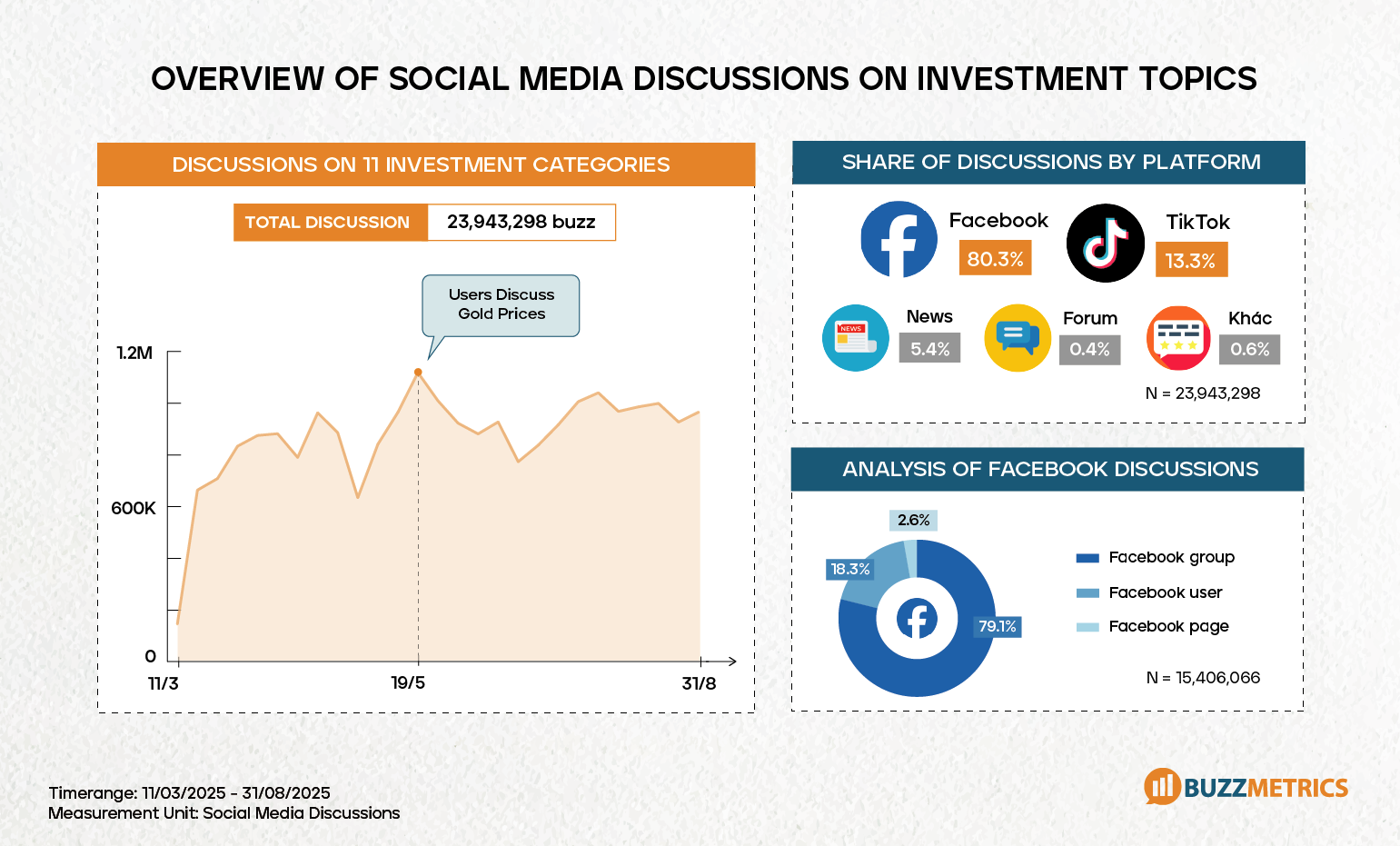
Here, discussions go beyond market movements to encompass other aspects such as sharing investment outcomes and comparing investment products, tools, and platforms. In addition, personal investment stories, scam warnings, and market incidents are frequently discussed, clearly reflecting investors’ risk concerns and their underlying need for reassurance and peace of mind.
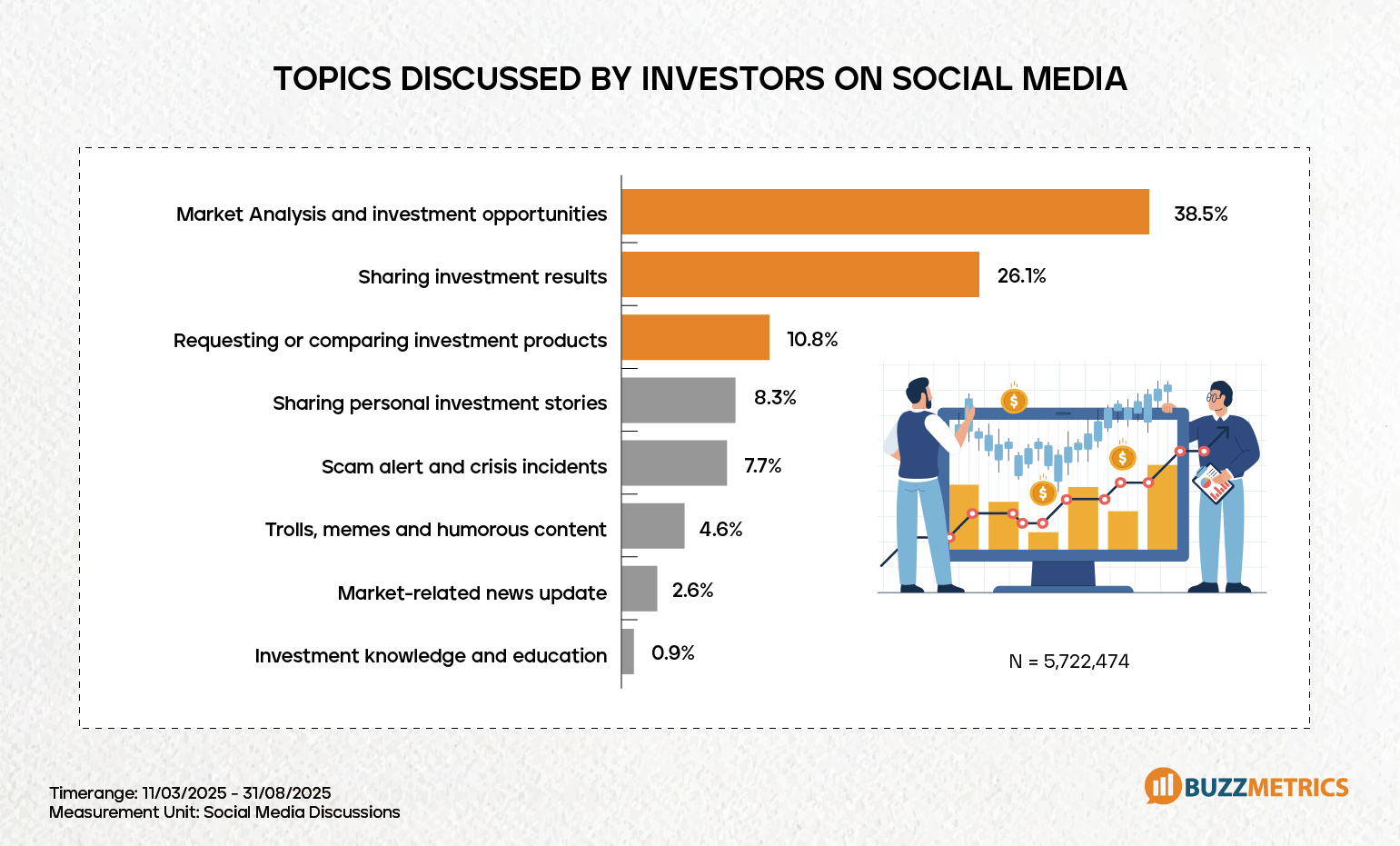
It is precisely this diversity and authenticity that make social media a 24/7 “open discussion room”—where investors express their real thoughts, genuine emotions, and true motivations. These elements do not appear in transactional data, yet they play a pivotal role in explaining why capital flows shift and why investors choose one investment channel over another.
2. Customer Segmentation: Beyond “Risk Appetite”
2.1 Segmenting Investors Based on Social Media Data
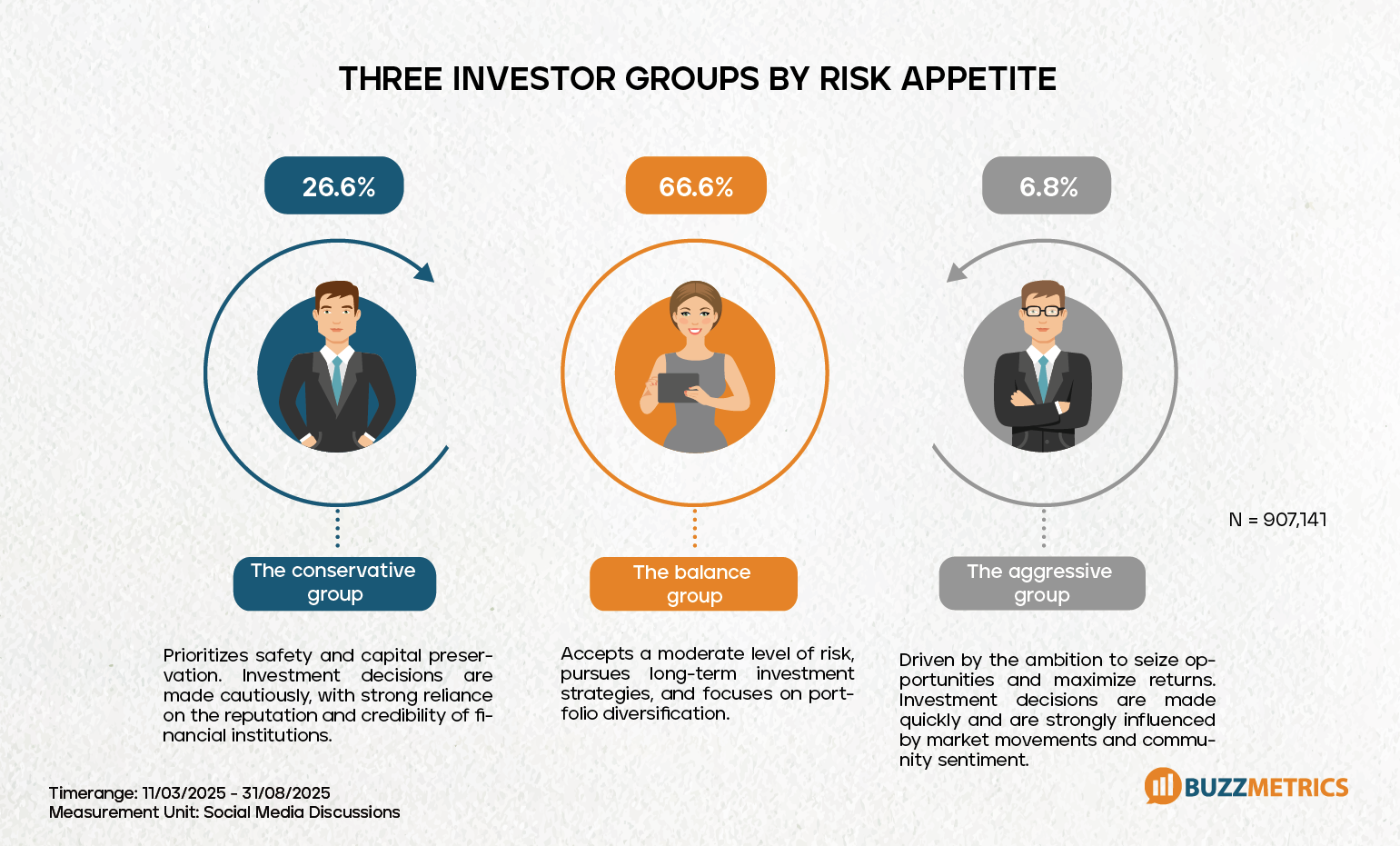
In traditional segmentation models, investors are often classified based on risk appetite, asset size, or age. However, social media discussion data reveals that real-world financial behavior is far more complex and dynamic. Through Social Media Research, banks can observe how investors’ needs, motivations, and decision-making mindsets continuously shift in response to market conditions. As a result, three distinct behavioral segments emerge:
- Conservative Group: Prioritizes safety and capital preservation. Investment decisions are made cautiously, with strong reliance on the reputation and credibility of financial institutions.
- Balanced Group: Accepts a moderate level of risk, pursues long-term investment strategies, and focuses on portfolio diversification. This group is open to trying new products when clear value is demonstrated and alignment with long-term financial goals is evident.
- Aggressive Group: Clearly driven by the ambition to seize opportunities and maximize returns. Investment decisions are made quickly and are strongly influenced by market movements and community sentiment.
Understanding the needs and motivations of these three customer segments forms a critical foundation for banks to proactively develop relevant products while also designing communication strategies that deliver the right message, to the right audience at the right time.
2.2 The Social Media Discussion Landscape: When Vietnamese Investors Prioritize Peace of Mind and Long-Term Stability
Analysis of discussion data shows that among the three common financial behavior segments, the Conservative and Balanced groups account for the largest shares, at 26.6% and 66.6% respectively. What these two groups share is a strong focus on accumulation for long-term goals such as children’s education, home ownership, vehicle purchases, and building a stable financial foundation. In contrast, discussions reflecting a pursuit of outsized returns and a high tolerance for risk represent only a small proportion of overall conversations.
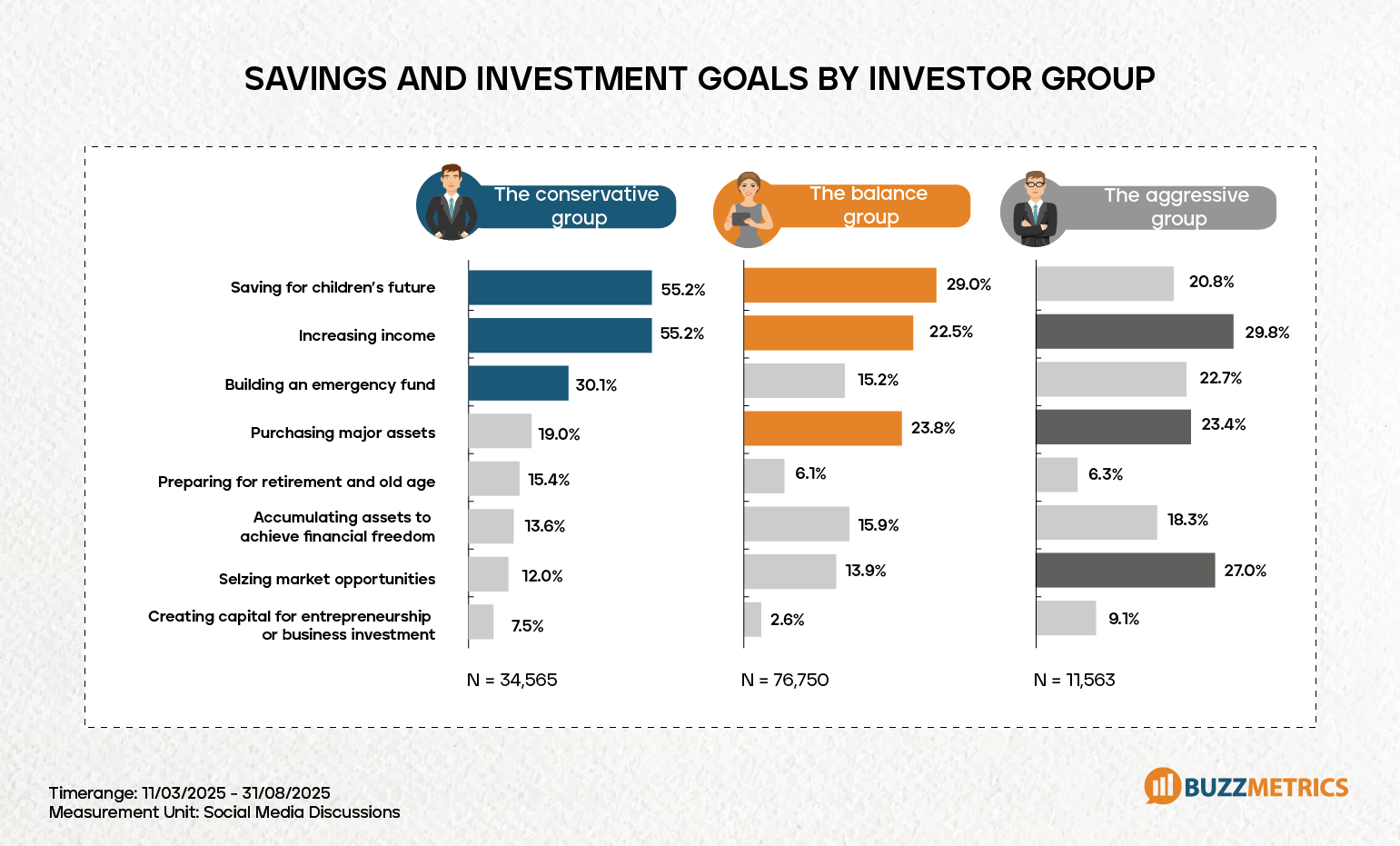
This reflects a clear shift: Vietnamese investors today prioritize “peace of mind” over maximum returns. For them, sustainable financial health and the ability to plan for the future with confidence matter more than short-term profit opportunities.
3. Case Study: Applying Social Insights to Communication Strategy
VietinBank has clearly shifted its communication approach. Instead of focusing on conveying information about interest rates or individual financial products, VietinBank chose to tell a broader and deeper story through the campaign “Living a Profitable Life” (Sống một đời có lãi). Here, the concept of “profit” is no longer understood merely as financial gain, but is expanded to encompass emotional values, well-being, life experiences, and what individuals accumulate throughout their journey of growth and maturity.
To fully convey this message, VietinBank launched the campaign with the commercial film “I Am Đen,” featuring a heartfelt personal narrative by rapper Đen Vâu, combined with rich, symbolic visuals set in a rustic and intimate coastal village. This simple yet profound storytelling approach allowed the idea of “profit” to be felt as everyday, relatable values rather than a rigid or conventional advertising message.
In addition, the hashtag #Songmotdoicolai was quickly embraced and widely used across social media. Beyond Đen Vâu’s fan base, many inspired audiences proactively attached the hashtag to their own life stories, charitable activities, and positive everyday moments. As a result, the campaign message was not only organically amplified but also reinterpreted, expanded, and enriched by the community in deeply personal ways.
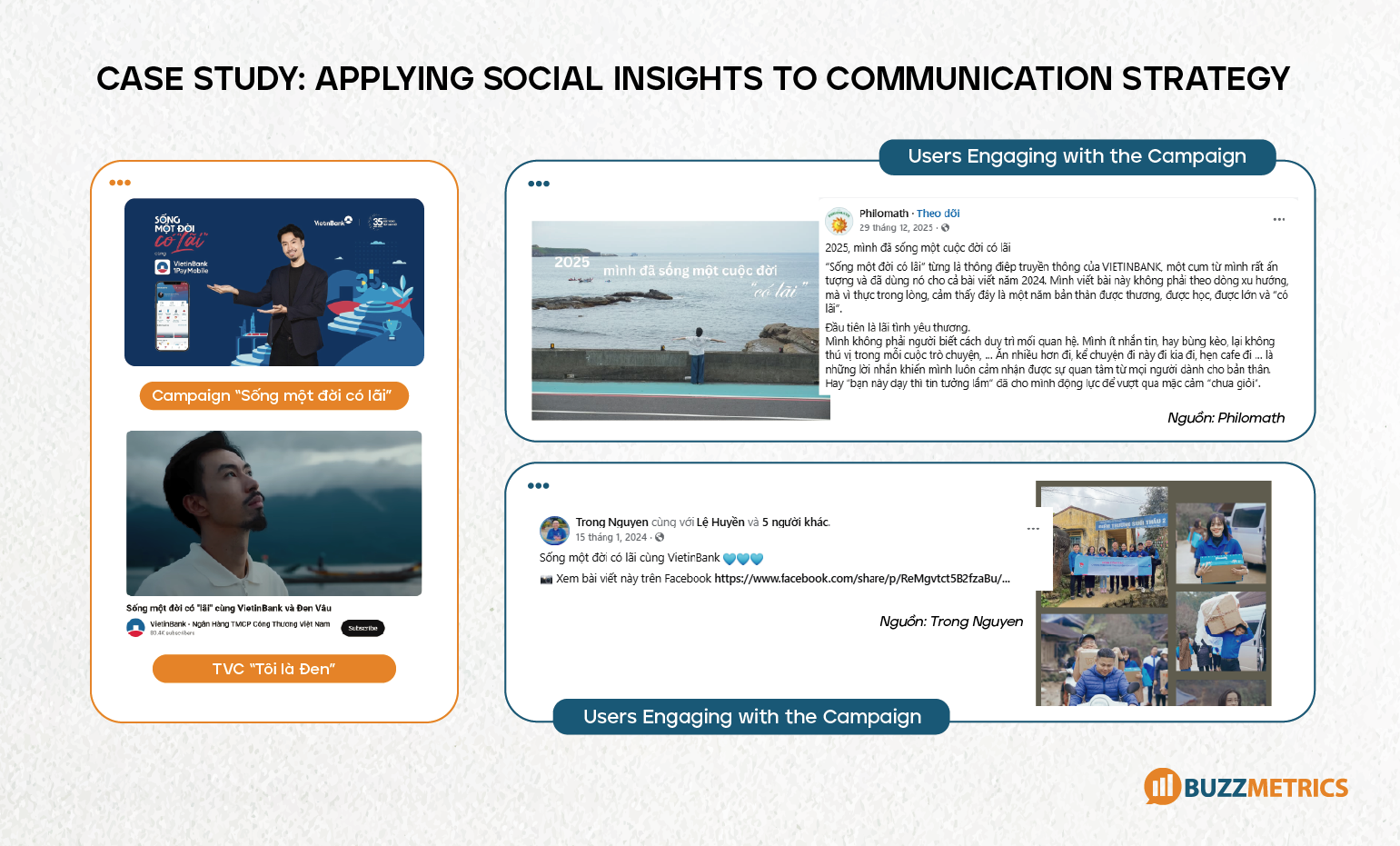
It is clear that Social Research served as a foundational pillar in enabling VietinBank to chart a differentiated path amid intense competition in the banking sector. Rather than continuing to compete in the race for interest rates and rigid financial figures, the bank chose to shift its focus toward building emotional value and fostering human connection. By understanding consumers’ preference for peace of mind, stability, and long-term values, VietinBank was able to redefine the notion of “profit” in a more relatable and human-centered way.
4. Conclusion
Social media discussion data indicates a clear shift among Vietnamese investors—from a mindset focused on pursuing high returns to one that prioritizes peace of mind and long-term stability. Concerns around family-oriented accumulation, capital preservation, and building a sustainable financial foundation now dominate conversations, reflecting needs that go far beyond interest rates or short-term investment performance.
In this context, Social Media Research is no longer an experimental option but a critical foundation enabling banks and financial brands to:
- Gain a deep understanding of customers’ true motivations,
- Develop products and messaging aligned with distinct behavioral segments.
- Build differentiation and long-term brand value.
Explore Buzzmetrics’ solution packages for the financial and banking industry here: LINK
Article Information




.png)

_11zon.webp)
.webp)




_11zon.avif)