

From Beauty Solutions to Everyday Habits: Skincare Industry Insights from Social Media Discussions (2024–2025)
In 2025, Vietnam’s beauty market is entering a new growth phase, driven by changes in how consumers approach and sustain personal care habits. Alongside the advantages of a young population and the rapid expansion of e-commerce, consumer behavior increasingly reflects the role of beauty as part of everyday life. Amid intensifying competition between domestic and international brands, Vietnam is emerging as a key market in Southeast Asia, marked by the intersection of beauty, technology, and evolving consumer culture.Within the skincare category, growth momentum is shifting away from intensive treatments and multi-step routines toward the need to maintain stable skin conditions that fit into daily lifestyles. This shift is also evident in social media discussions, where skincare is increasingly perceived as a long-term living habit rather than a short-term beauty solution.Buzzmetrics’ report Vietnam Facial Skincare – Market Shifts & Evolving Consumer Demands (2024–2025) analyzes more than 61 million skincare-related discussions collected between October 1, 2024 and September 30, 2025. The report highlights how consumers’ perceptions, product choices, and usage behaviors have evolved compared to previous years.
This article focuses on three key areas:
- The global and Vietnamese skincare market landscape
- How real skincare needs are shaped through social media discussions
- Why sun-protecting and moisturizing have become the backbone of modern routines
→ To explore the full dataset, detailed insights by skincare needs, and how brands can leverage these signals in their strategies, please refer to the Vietnam Facial Skincare – Market Shifts & Evolving Consumer Demands 2024–2025 – Full Report.
The Global and Vietnamese Skincare Market Landscape
Globally, skincare remains one of the most stable growth segments within the beauty industry, reaching USD 151.8 billion in 2023 and projected to grow to USD 231.6 billion by 2032 (CAGR ~5%). However, the key shift lies in the nature of demand: growth is no longer driven by adding more steps to skincare routines, but by how consumers approach skincare as a long-term process of maintaining skin health.
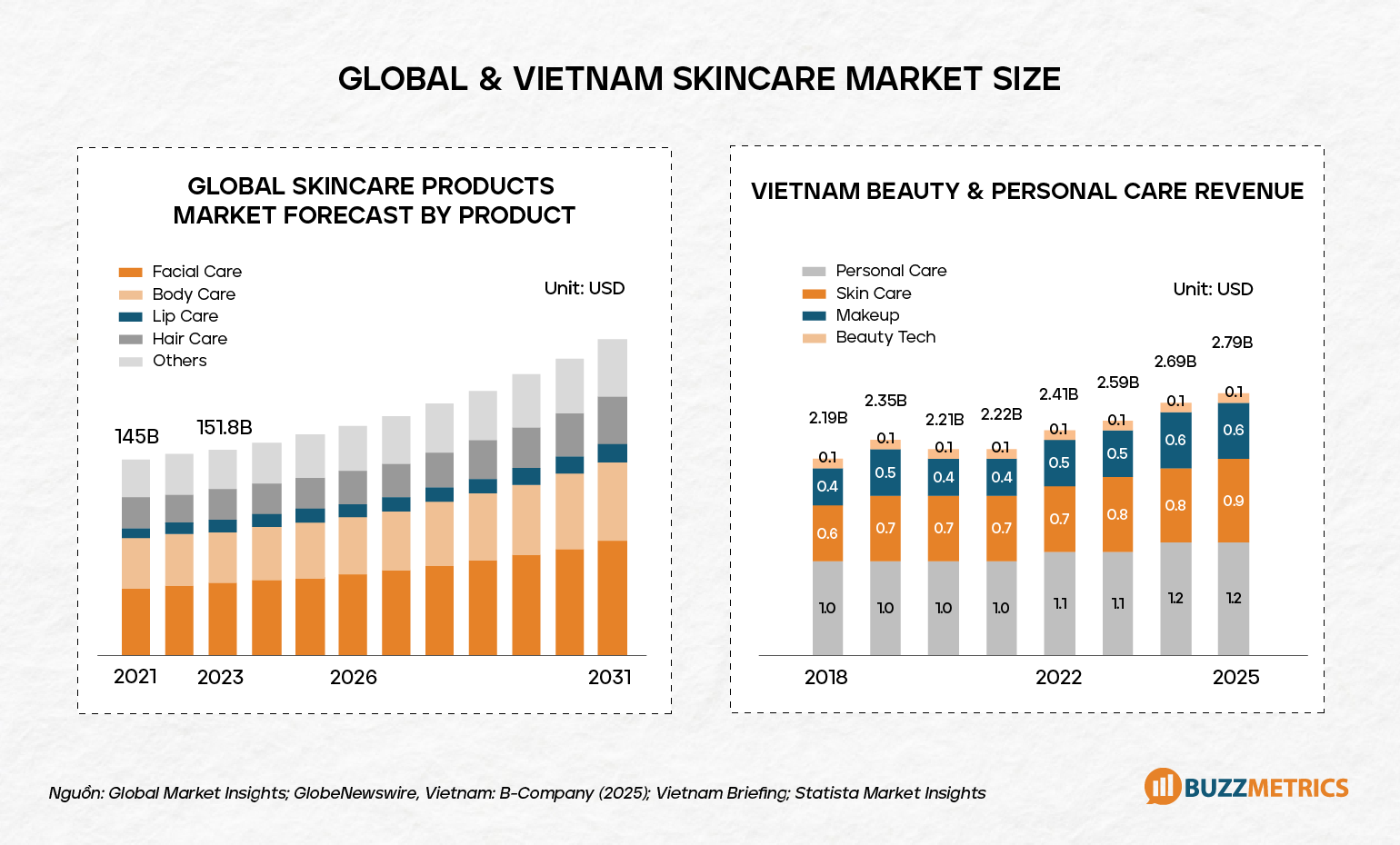
In Vietnam, the Beauty & Personal Care market is estimated at approximately USD 2.74 billion, with a steady growth rate of around 3.3% annually through 2029. Within this landscape, skincare continues to be a core growth driver, fueled by daily skincare habits and rising demand for gentle, skin-friendly formulations that are easy to maintain in simple routines. The expansion of e-commerce and social commerce has further accelerated this trend, enabling consumers to access information, compare products, and reference real user experiences before making purchase and usage decisions.
Skincare on Social Media: When Real Needs Become Clearer
With over 61.4 million discussions during the research period, skincare remains one of the most active categories on social media. The majority of content is generated by online sellers (81.4%), while consumer- and brand-driven discussions account for a smaller share. This indicates that while social skincare content is heavily sales-oriented, it does not fully reflect how real consumer needs are formed.
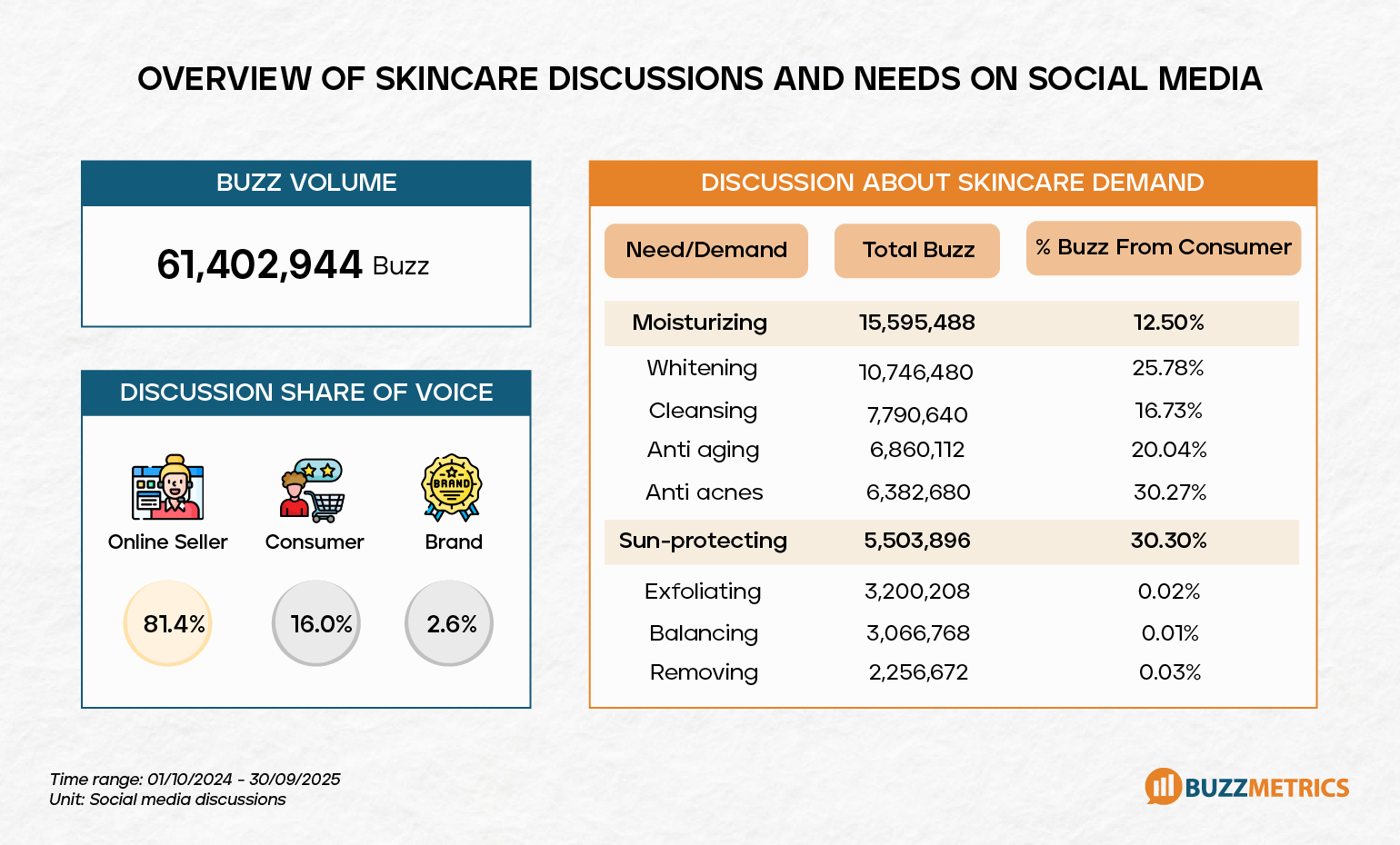
When focusing specifically on discussions led by consumers, key themes revolve around on-skin feel, comfort during use, and the ability to sustain skincare routines over time. Foundational steps such as moisturizing and sun-protecting are mentioned more frequently than intensive corrective needs. This suggests that consumers increasingly view skincare as a daily habit, where consistency and stability matter more than immediate results.
Skincare User Profile: Prioritizing Stability and Maintainability
Current skincare discussions are dominated by young female users, particularly those aged 25–34, a group with strong purchasing power and high social media engagement. For this segment, skincare is no longer about experimenting with trends, but has become an integral part of daily life. Their conversations emphasize routine stability, product suitability, and the experience of regular use.
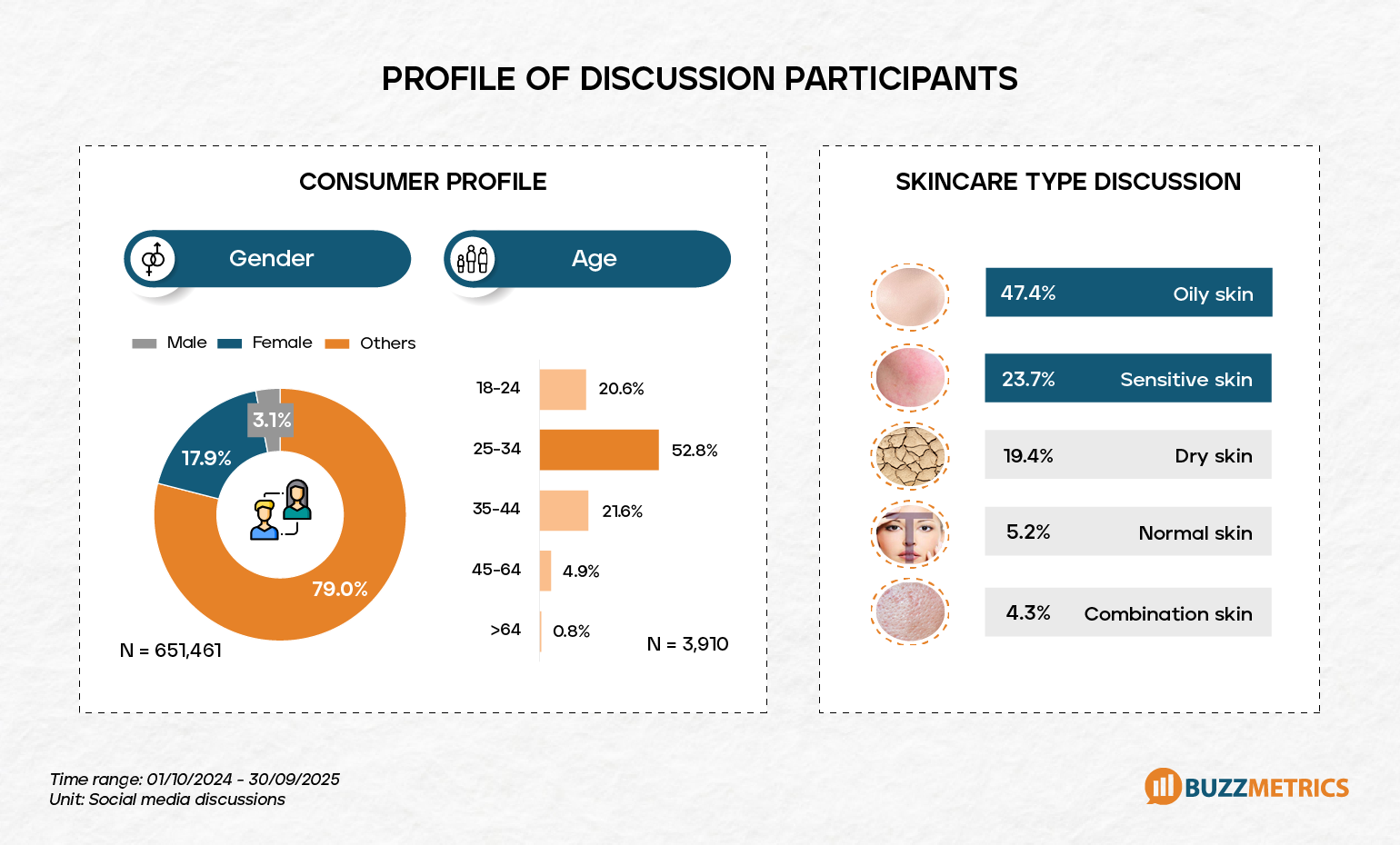
At the same time, the growing participation of male users indicates that skincare is expanding beyond traditional beauty boundaries. This group tends to approach skincare pragmatically, prioritizing simplicity, convenience, and comfort.
By skin condition, oily skin (47.4%) and sensitive skin (23.7%) are the most frequently mentioned. In the context of Vietnam’s hot and humid climate and urban environment, this highlights clear product expectations: gentle formulations, low risk of irritation, and suitability for long-term use. Rather than seeking aggressive solutions to “fix” skin issues, consumers increasingly talk about preventing deterioration - avoiding irritation, minimizing congestion, and maintaining comfort with continuous use.
The Shift Toward Foundational Skincare Routines
Social media discussions indicate that skincare demand is increasingly centered on foundational routines that can be sustained daily. Consumers favor steps that are easy to repeat, comfortable to use, and effective in maintaining stable skin conditions over time. Within this context, sun-protecting and moisturizing consistently appear as core elements of daily routines, closely linked to living conditions in Vietnam and dermatological recommendations for protecting and maintaining the skin barrier.
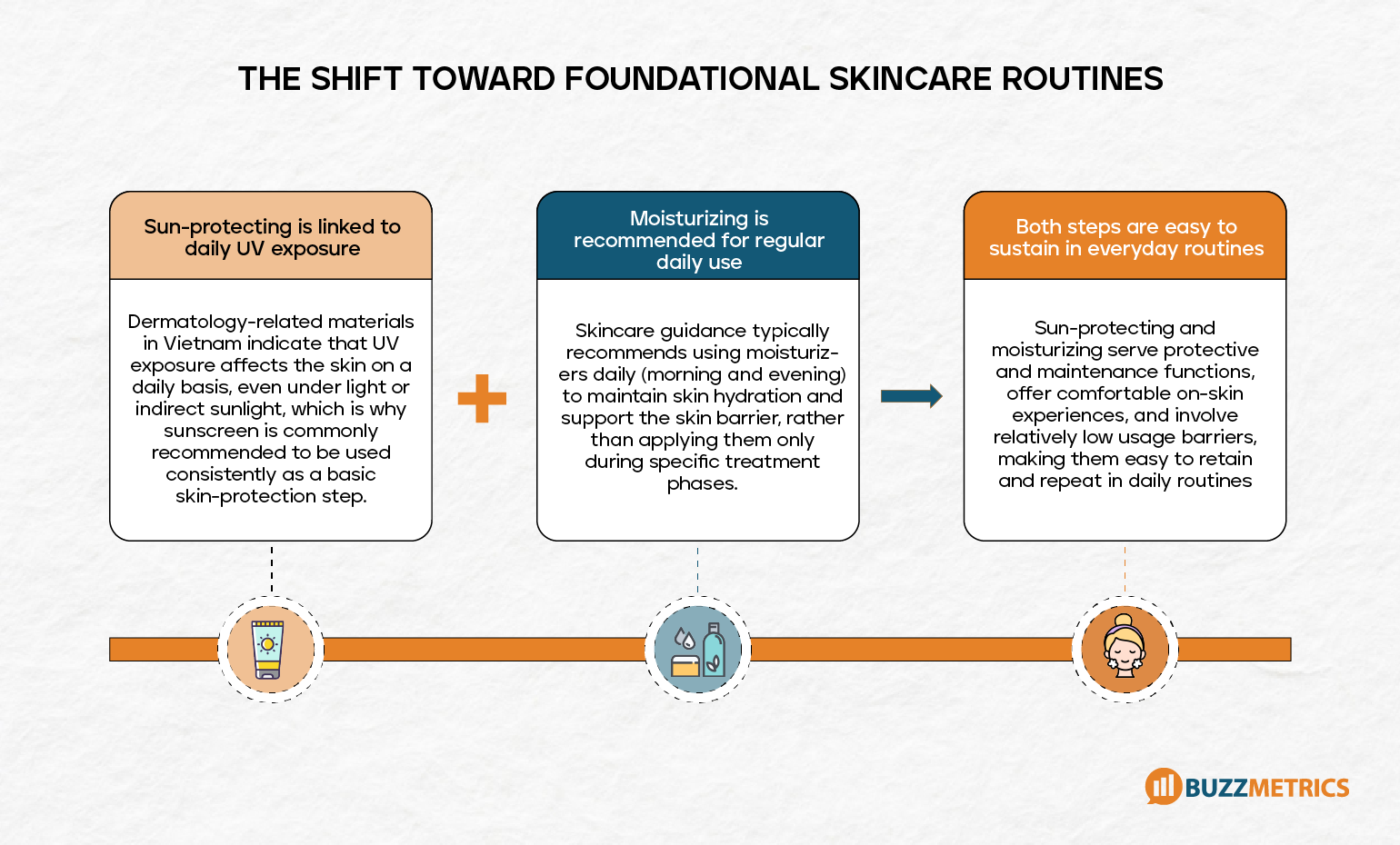
Sun-protecting is viewed as a basic defensive step, while moisturizing supports skin stability amid constant exposure to heat, humidity, pollution, and external stressors. What both steps share is a low usage barrier, allowing them to be easily integrated and consistently maintained without placing additional pressure on the skin.
However, across both product categories, consumers continue to hold high expectations for a balance between effectiveness and user experience. Products are expected to deliver functional benefits while remaining lightweight, comfortable, and safe for everyday use. Finding options that can support long-term commitment remains a challenge.
This shift presents new requirements for brand strategies and product portfolios. The focus is moving away from short-term efficacy toward the ability to accompany consumers in their daily lives. Understanding emerging needs on social media, along with unmet expectations and usage barriers, becomes a critical foundation for informed brand decision-making in the next phase of growth.
Conclusion
By synthesizing market data and social media discussions, several signals are clearly reshaping how consumers approach skincare:
- Skincare is shifting toward daily-use needs: Consumers are moving away from complex, multi-step routines and aggressive interventions, favoring foundational steps that can be sustained long term.
- User experience has become a core evaluation criterion: On-skin feel, ease of use, and routine stability are discussed more frequently than brand names or immediate improvement claims.
- sun-protecting and moisturizing anchor modern routines: These steps effectively address protection and maintenance needs in Vietnam’s living conditions, while offering low barriers to habit formation.
- Market opportunities lie in solutions that balance effectiveness and ease of use, opening pathways for long-term, sustainable growth.
Article Information




_11zon.webp)
.webp)




_11zon.avif)