
After the Social Media “Craze,” is Matcha set to become a Sustainable Beverage Trend?
_11zon.webp)
Matcha has become a global beverage phenomenon in recent years, even leading to shortages in Japan (according to Thanh Nien Newspaper). In Vietnam, the matcha market size is forecasted by Mobility Foresights to grow from USD 340 million in 2025 to USD 500 or even USD 780 million by 2030. Furthermore, according to IPOS, consumers are willing to pay an extra VND 10,000 - 20,000 for a high-quality cup of matcha. So, how is matcha being discussed on social media?
Buzzmetrics' report, based on an analysis of 3.78 million social media discussions, will focus on answering two questions:
- What is the true nature of the matcha beverage phenomenon: a short-lived craze or a sustainable trend?
- What truly drives users’ long-term attachment to matcha?
1. Matcha on Social Media: Is it just a temporary trend?
In recent years, social media has witnessed the rise of many "trendy" food and beverages such as scallion milk tea, hand-squeezed lemon tea, cheese coin bread,... However, these products only received attention for a relatively short period and almost disappeared after just one or two months. In contrast, there are foods and beverages that are seasonal, receiving much attention on special occasions, such as mooncakes for the Mid-Autumn Festival or red bean sweet soup for the Double Seventh Festival. And there are also sustainable items, always of interest to users at any time, like coffee or milk tea. So, which category does Matcha belong to?
From Buzzmetrics' data, in the period from early 2024 to October 2025, the total volume of discussions about Matcha reached nearly 3.78 million buzzes. In April 2025, discussions about Matcha increased sharply. This stemmed from the simultaneous participation of many KOLs and young community pages with a series of humorous content about Matcha. The sudden spike in discussions in April led many to easily associate Matcha with the "one-hit wonder" model – a rapid explosion followed by a quick cooling down. However, upon more detailed examination, the matter is not that simple.
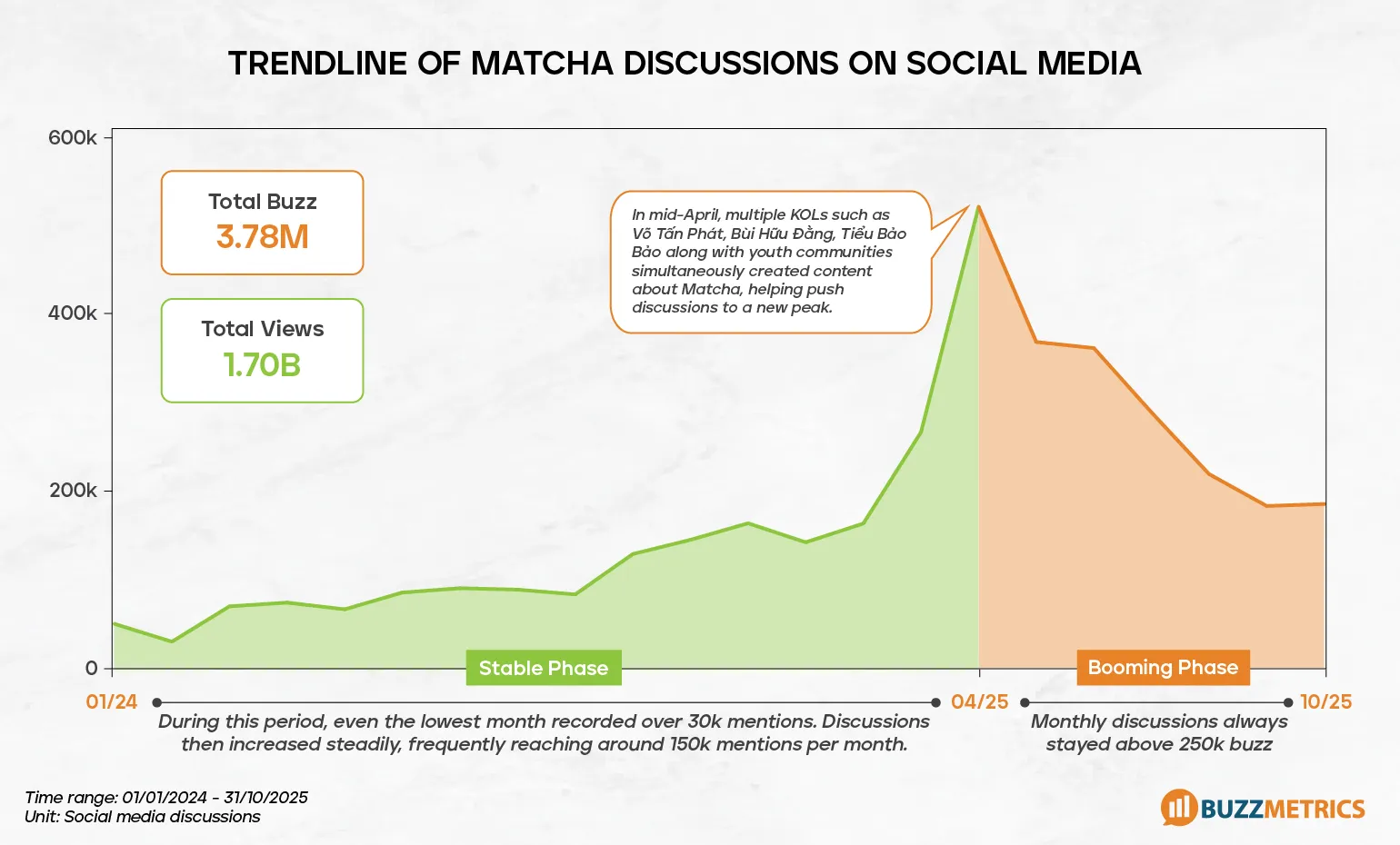
Before April 2025, Matcha had been continuously discussed since early 2024, with the lowest level still reaching about 30,000 discussions per month. Moving into the second half of 2024 and throughout 2025, monthly discussions maintained above 100,000, even exceeding 150,000 discussions in many months. After April, Matcha did not disappear from the discussion flow but returned to a stable state, being mentioned consistently and regularly. This shows that the sudden increase in April was just an "outlier" amplifying a topic that users were already interested in beforehand.
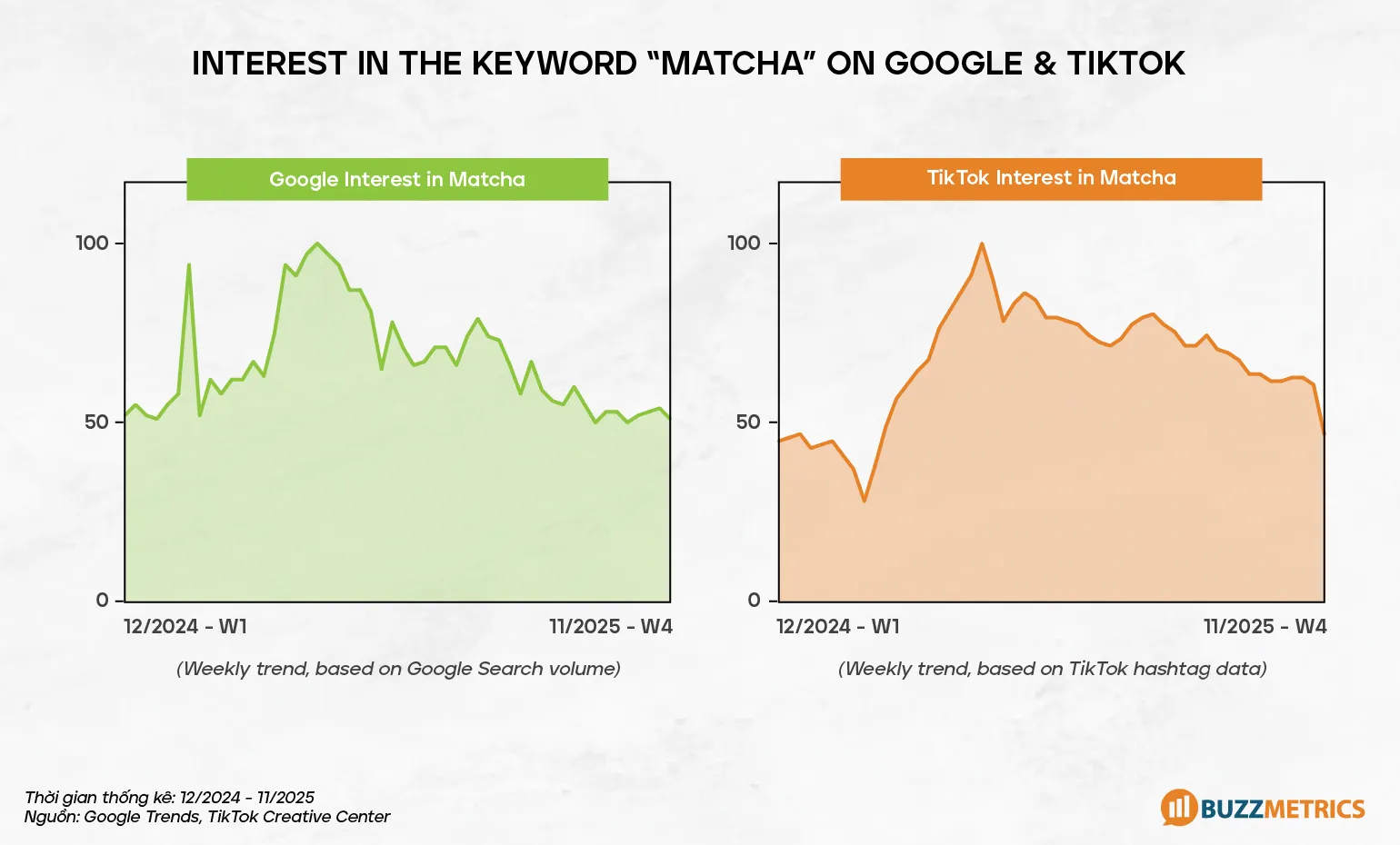
The data provided by Google and TikTok will help to more specifically visualize user interest in Matcha. According to Google Trends, searches for Matcha in Vietnam were relatively volatile from late 2024 to early 2025, peaking also around April 2025 and then stabilizing with an interest index always above 50 each month. TikTok measurement based on hashtags about Matcha also shows a similar development.
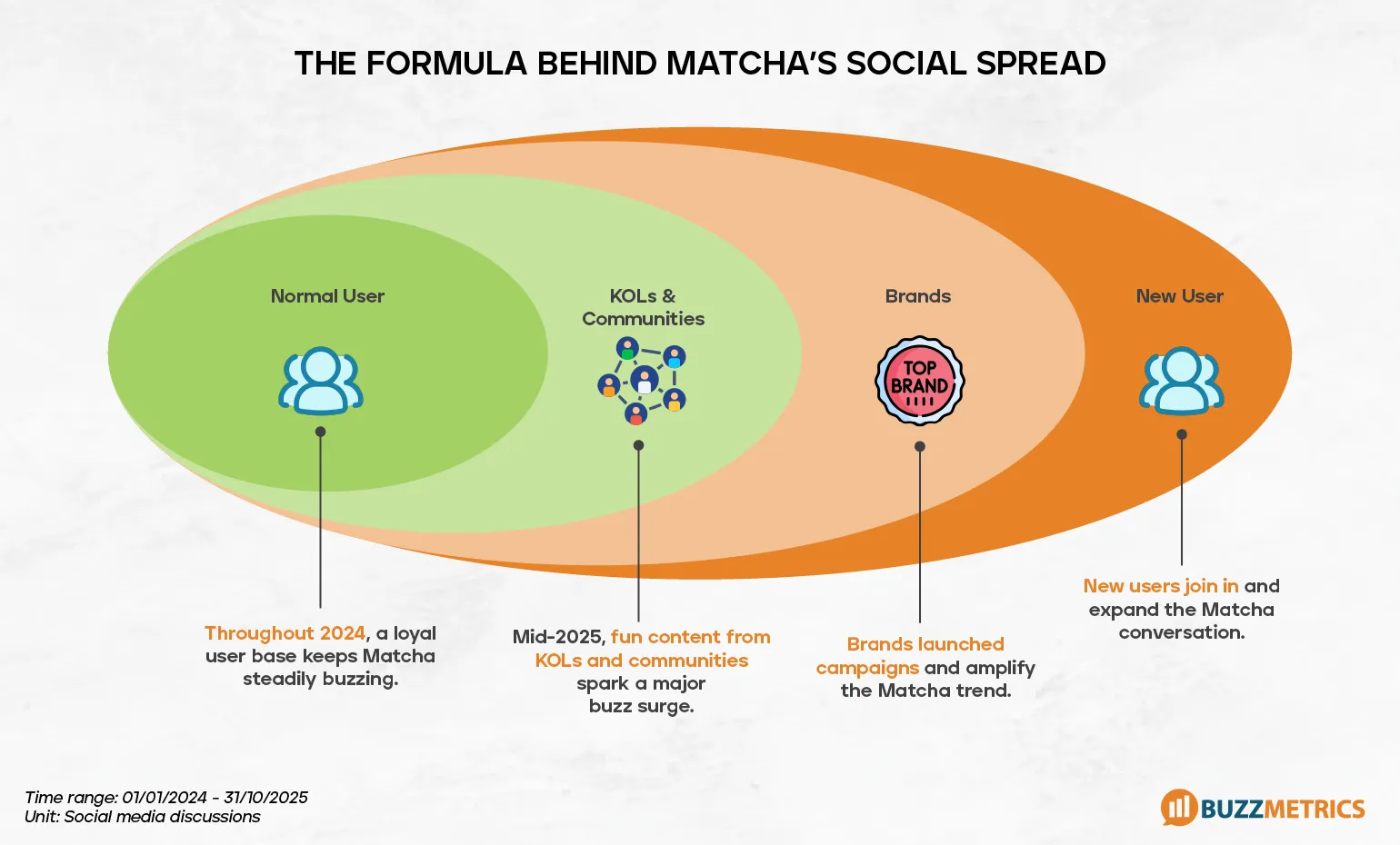
Overall, Matcha shifted from a topic discussed steadily on social media to a prominent trend thanks to multi-layered viral effects. This process occurs through four steps:
(1) It started with a group of users who liked drinking Matcha and discussing Matcha on social media.
(2) KOLs and community pages began paying attention to Matcha and participating in the content creation process, helping to amplify discussions. At this point, Matcha was already being widely discussed across all social media platforms, with Facebook and TikTok leading.
(3) Brands recognized Matcha's potential so they launched responsive products, promoting and extending the level of spread.
(4) New users from different age groups joined the discussion. The Matcha topic was expanded and maintained over time.
Also according to Buzzmetrics' statistics in November 2025, Matcha is the third most discussed non-alcoholic beverage, only after milk tea and coffee. Thus, overall, Matcha does not operate as a short-term trend, but has become a sustainable trend, driven by actual demand and consumer behavior. So what has created its widespread appeal and made users stick with Matcha long-term?
2. The appeal of Matcha comes from diverse factors
To understand why Matcha can maintain long-term appeal, we need to look at the real motivation behind user behavior. Discussion data shows that consumers come to Matcha not only out of curiosity or following the trend.
2.1. The "3-in-1" formula: Delicious - Fun - Healthy
Firstly, Matcha is loved because it meets many consumer needs simultaneously. There are 7 main reasons users choose to drink Matcha regularly that are discussed. Prominent among them are its easy-to-drink flavor, relaxing feeling – improving mood, stable energy source, along with benefits related to health and mentality.
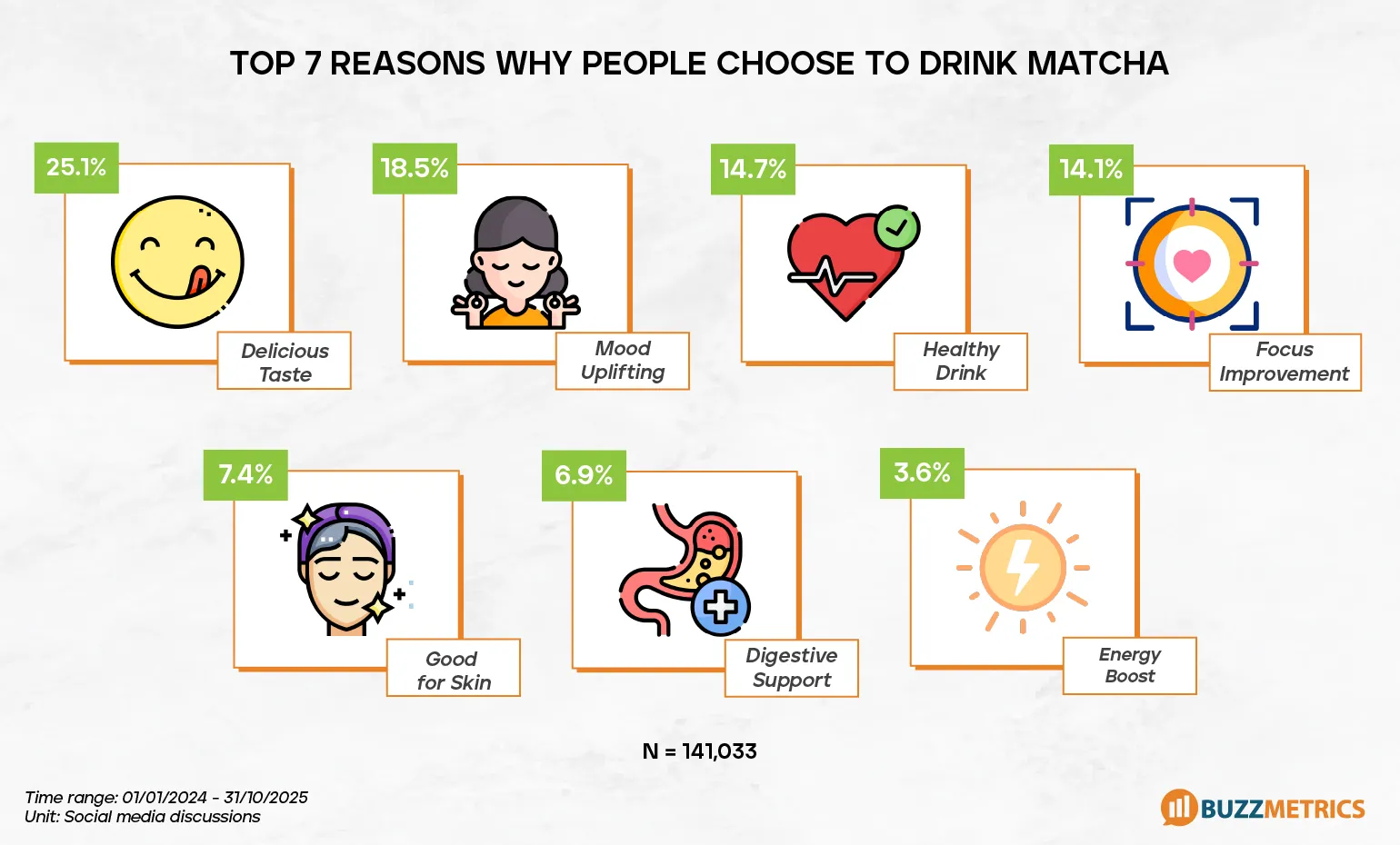
Compared to other caffeinated beverages, Matcha is evaluated by users as providing a gentle feeling of alertness, not causing "irritability," suitable for regular use throughout the day. This is also the reason Matcha appears densely in discussions associated with healthy lifestyles, effective work, and self-care – topics of increasing interest on social media.
2.2. A Personalized Experience: Users Become Their Own “Creators”
Not stopping at just drinking, Matcha is also mentioned in various user activities. Data shows that discussions about Matcha range from drink check-ins, knowledge sharing, product reviews, to entertainment and lifestyle content. This transforms Matcha from a mere consumer product into a highly personalized experience.
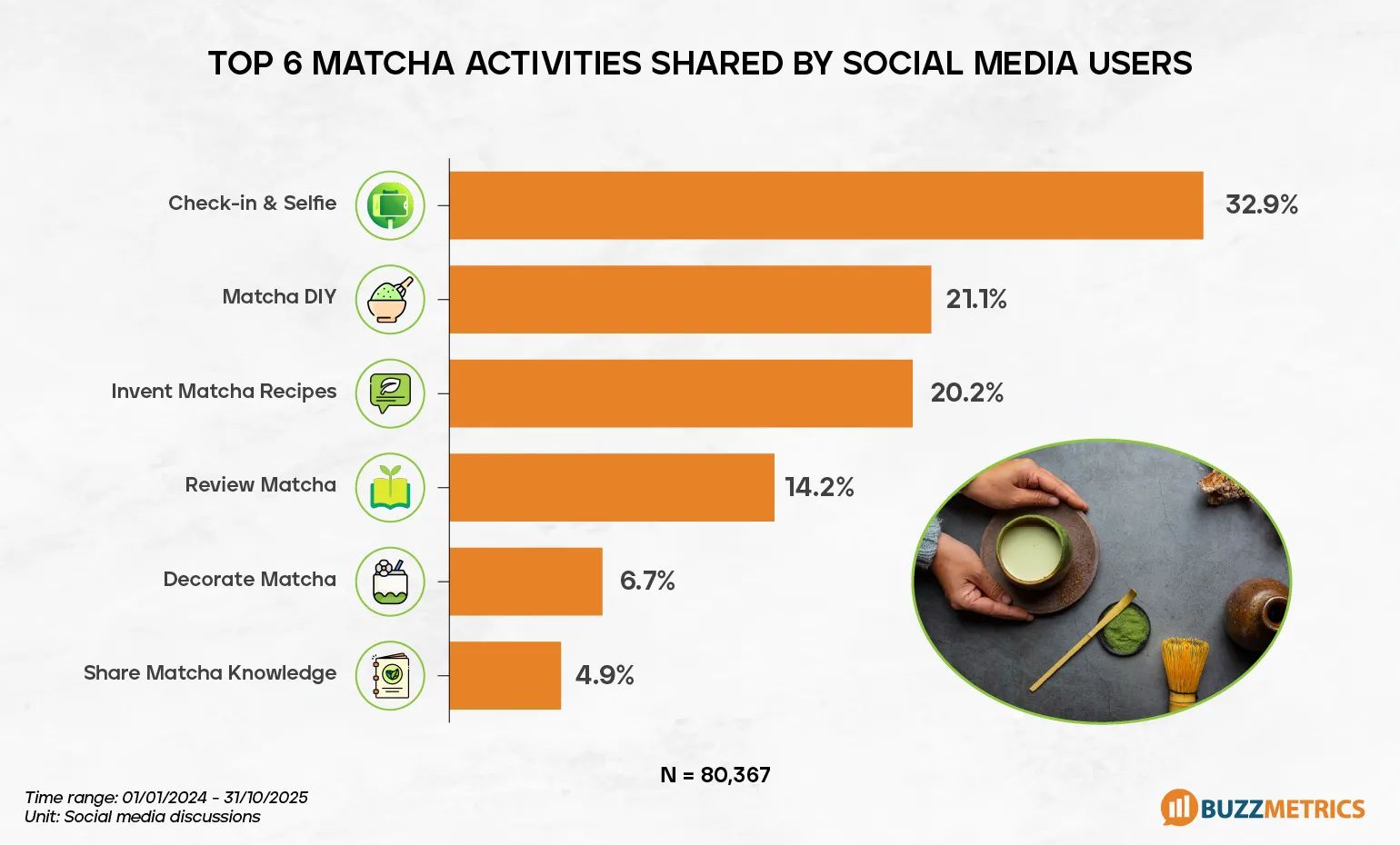
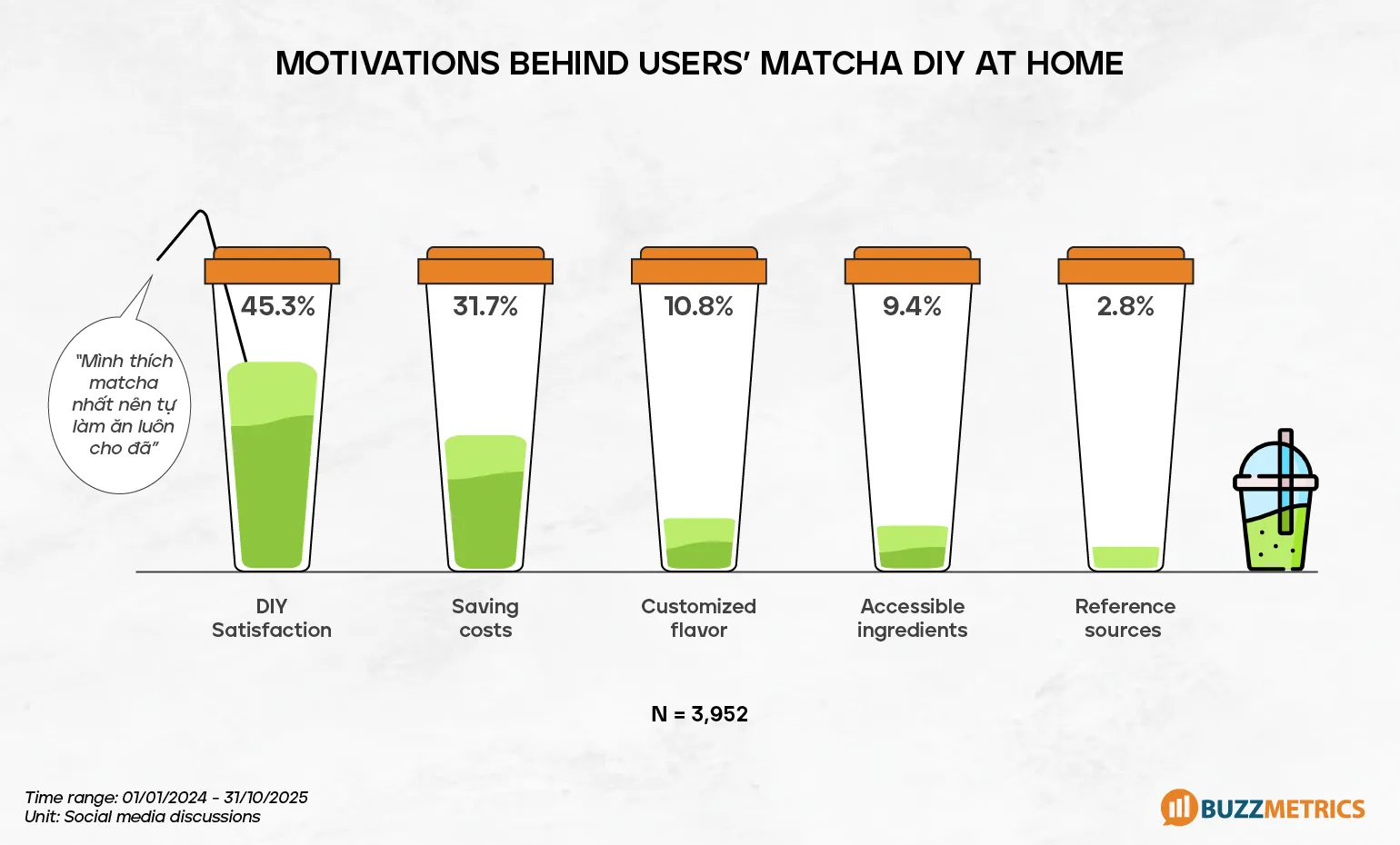
In particular, the DIY Matcha trend clearly reflects the role of Matcha in daily life. Making Matcha at home not only helps save costs but also brings a feeling of relaxation, creativity, and proactivity. Accessible ingredients, not overly complicated preparation methods, and the ability to customize flavor make Matcha a true "hobby" for many users.
2.3. Flexible combination: "1 Matcha" + Multiple recipes
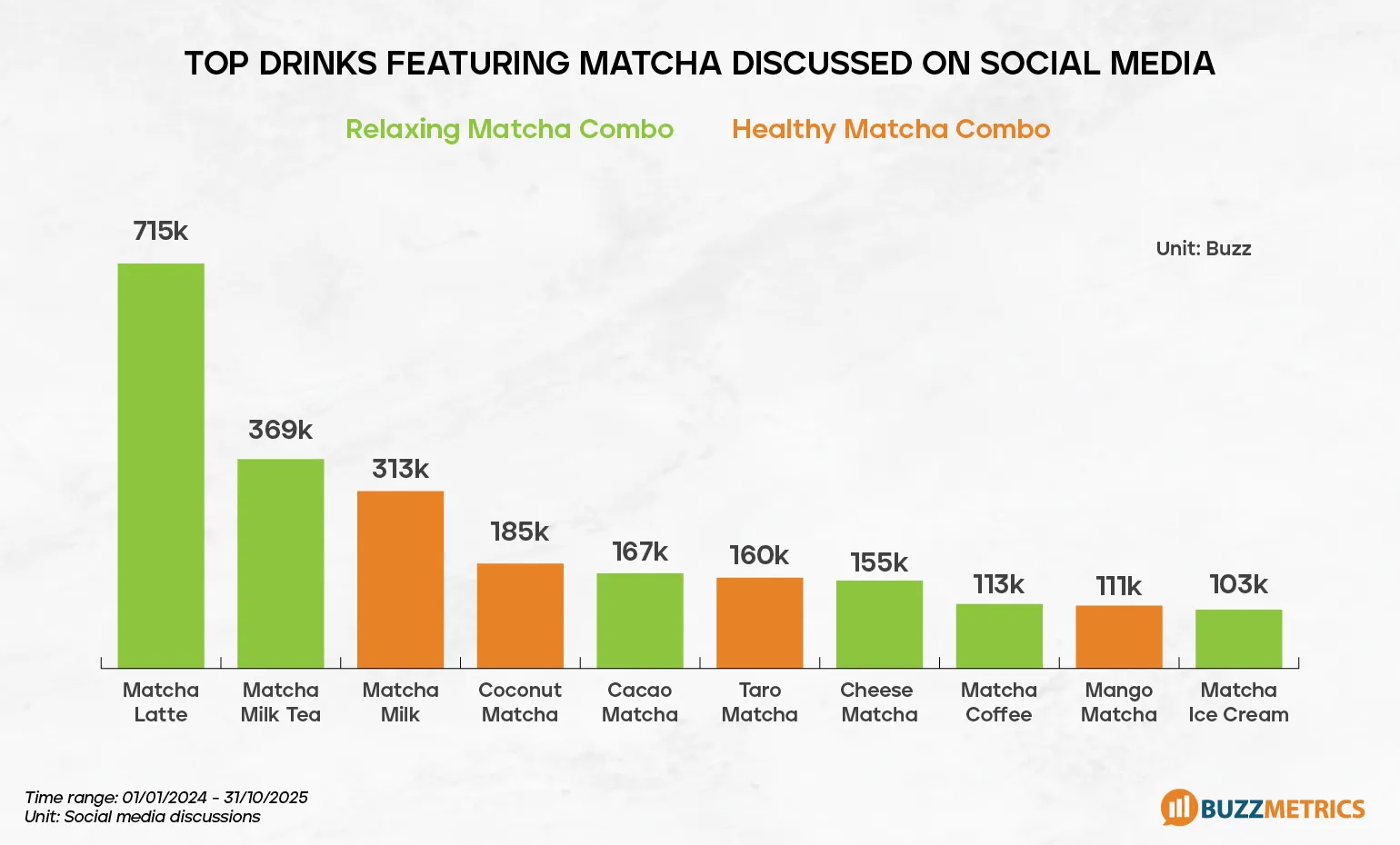
The flexibility of Matcha is also shown in its ability to combine with many different beverages. Matcha can be paired with fruits like mango, taro, coconut to bring a drink that is both delicious and "healthy"; on the other hand, it can be combined with milk tea, coffee, ice cream to offer a youthful drink, exuding Gen Z style. This very "adaptability" helps Matcha continuously refresh its flavor, avoid boredom, and maintain sustainable discussion on social media.
3. Conclusion
In summary, Matcha has crossed the boundary of a short-term trend to become a sustainable beverage trend. This is demonstrated by the fact that topics surrounding Matcha have always been stably discussed for nearly two years.
More importantly, consumers choose Matcha not because they are following the crowd or FOMO (fear of missing out). Users stick with Matcha because of the tangible value and positive emotions it brings: From its distinctive flavor, the joy in self-preparation, to the feeling of improving mood and being beneficial for health. They are not just buying a drink, but are investing in a personalized experience and a more proactive, joyful, and healthy lifestyle.
This is the foundation that helps Matcha continue to have a solid position on social media and in the long-term strategy of F&B brands.
Matcha is not just a "craze" driven by social media, but is nurtured by actual consumer demand. When flavor, health benefits, and personalization ability converge, Matcha surpasses the short life cycle of a trend to become a sustainable beverage trend and become a part of consumers' daily life.
Article Information



.png)
.png)